
"Central and South America"
1000 article(s) found

Sweet flavor nurtured by microclimate in the main coffee producing areas of Central and South America, Panama coffee bean producing areas.
Professional coffee knowledge exchange more coffee bean information please follow Coffee Workshop (Wechat official account cafe_style) Front Street-Panamanian Coffee introduction Central America has the natural advantages of sunshine, land, and mountains, and an abundant labor force, the region is uniquely blessed to grow and produce high-quality coffee. In the late 19th century, coffee had become a source of economic growth in Central American countries.

South African coffee beans are fragrant and have less acidity, like coffee bean cafes in Central America.
Boutique coffee has a strict grading system. Generally, raw beans are preserved in parchment coffee beans in the form of endocarp after processing, and the endocarp is removed before export. Go through a strict grading process to ensure the uniformity of quality. And it is very important to preserve the protection in the process of transportation, such as the control of temperature and humidity, the control of ventilation, avoiding odor adsorption and so on.

What is the standard of coffee grading in Central and South America? does altitude determine the level of coffee?
It is understood that the more common classification of coffee beans is generally based on the size of coffee beans, according to the size of the sieve, and also according to the defect rate. of course, the difference in this classification also goes deep into every country and region, and they cannot be done step by step. after all, there is a big difference. Most of the Central and South American countries are in Central and South America, and most countries are classified as one.
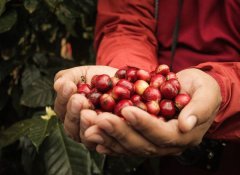
Costa Rica where coffee beans are grown in Central and South America.
Costa Rican coffee cultivation was introduced by Cuba in 1779 and exported for the first time in 1820. There are about 32000 coffee farmers, with an average planting area of less than one hectare (10000 hectares) per farmer. Costa Rica has a population of 41 billion (2006), with a coffee planting area of 82500 hectares and an annual production of 1.7 million bags (60kgs per bag). The annual domestic consumption is 380000 bags.

Nestle capsule coffee machine official website, what is coffee capsule?
Nestle capsule coffee machine official website, what is coffee capsule? Many people may hear the word coffee capsule for the first time and feel confused and feel like medicine. In fact, the word is translated from the English capsule, because its own small aluminum platinum space contains coffee powder, so the name. Because the wall of the capsule is hard and can maintain the prototype at high temperature, so
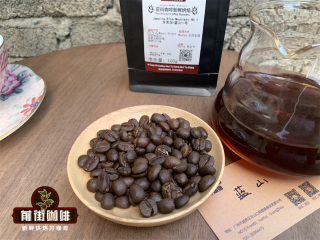
The most famous Coffee beans in the World Coffee beans from Central and South America and their producing areas
Do you know where the most famous coffee beans in the world are? for you, the best coffee is found by yourself. Avoid using specific brands, which will hide the source of the coffee from you. Here is a list of some coffee in the world for your reference. The following is an introduction to the origin of individual coffee beans in Central and South America. Brazil:

The National Union of Central and South American Coffee Diseases lend a helping hand.
The outbreak of coffee leaf rust in the coffee producing areas of Central and South America began at the end of last year, resulting in a reduction in local coffee production, which has seriously affected the local people's livelihood and economic industry. The National Cooperation Council of the Ministry of Foreign Affairs said that domestic plant pathologists have been invited to local friends to learn about the situation, and a regional plan will be planned to provide prevention and control assistance to friendly farmers through a combination of technology and funds.
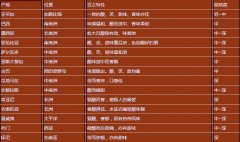
Analysis and summary of coffee characteristics from different origins
Jamaica Caribbean consistent sour, bitter, sweet, aroma is also good light ~ Central Brazil South America taste mild, sour bitter moderate, aroma soft Central Mexico North America grain large and sour strong, fragrant medium ~ deep Colombia South America sour, bitter, sweet heavy and thick, color as a good wine medium ~ deep Salvador Central America sour, bitter, sweet moderate ~ deep brother

Description of Latin American coffee flavor, introduction of Latin American coffee
The characteristics of the flavor of Central and South America: balanced, moderately sour and mellow Central and South America is the world's largest coffee producing area, where there are numerous boutique coffees. Take Colombia, Guatemala or Brazil as an example, good coffee is enough to make people dazzling. What is the resource advantage that makes Central and South America so good? French naval officer Gabriel Ma in 1721

Coffee producing area in South America | what are the flavor characteristics of coffee growing areas in Brazil?
Professional coffee knowledge exchange more coffee bean information please follow the coffee workshop (Wechat official account cafe_style) front street-South American coffee producing areas brief introduction to Brazil coffee producing areas in Central and South America is the world's largest coffee producing region, the amount of output here has a clear impact on the global coffee production rate, among which Brazilian coffee is the largest country in Central and South America and the first coffee producer.
The flavor of Guatemalan coffee beans Central and South America coffee beans Guatemala
Coffee was really introduced into Guatemala in 1750 by Father Jesuit, where the coffee industry was developed by German colonists at the end of the 19th century. Today, most of the coffee industry's production takes place in the south of the country. There are seven main coffee producing areas in Guatemala: Antigua, Coban, Atitlan and Huehuete.

The flavor and taste of Honduran coffee from Central and South America.
Professional coffee knowledge exchange more coffee bean information please follow the coffee workshop (Wechat official account cafe_style) Honduras was previously less well-known in the consumer market due to the lack of strong support in the handling and transportation of raw beans. In recent years, the roasting countries have actively changed and expanded the coffee industry, which has gradually opened up the international popularity of coffee from Honduras. Flood

Located in the middle of North and South America, the Guatemalan Coffee Waijangs Plateau
Guatemala is located in the center of North and South America, and its geographical location occupies an important position in Central America. Guatemala covers an area of about 108899 square kilometers. The land features can be divided into plateau volcanoes, lowland tropical forests, volcanic sandy shore plains along the Pacific coast, and virgin lands along the Caribbean Sea. The SierraMadre Mountains of Central America span east and west of Guatemala, covering an area of

Introduction to the quality of Kenyan coffee varieties different from bourbon beans in Central and South America
Different from bourbon beans in Central and South America. This Kenyan native species was created by Scott Laboratories in 1930, known as SL for short. Agronomists wanted to find a kind of bourbon with high yield and resistance to diseases and insect pests, and obtained SL28 through experiments. SL28 is a genetic variant with a mixed pedigree of French missionaries, mochas and Yemens Tibica, which was originally cultivated for SL28.

Honduras, a coffee producing country in Central and North America
Honduras is a mountainous country in Central and North America with a population of more than 8.3 million and an area of about 112,000 square kilometers. Located in northern Central America. It is bordered by the Caribbean Sea to the north, the Gulf of Fonseca in the Pacific Ocean to the south, Nicaragua and El Salvador to the east and south, and Guatemala to the west. More than three-quarters of the territory is mountainous and plateau. Mountains extend from west to east, inland for lava plateau, mountainous
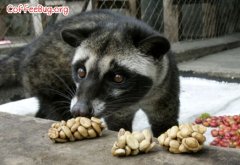
Indonesian coffee Asian coffee has a higher alcohol thickness than Central and South America and African beans.
The mellow thickness of Asian coffee is higher than that of Central and South American and African beans, but its sour taste is lower, with slightly sunken wood, herb, spice and earthy flavor, and its low and stuffy aroma is higher than that of rising sour flavor. At the end of the 17th century, the Dutch East India Company transplanted Indian Arabica trees (Tibica) to Jakarta, Java. Due to the favorable climate and soil, Arabica quickly spread to Sumatra in Java.

The coffee-producing area of El Salvador, northwest of Central America and bordering the Pacific Ocean to the south, introduces the Iza of Sonsonate province.
In El Salvador, the coffee beans rich in the Kuskabapa region are the best, slightly lighter, fragrant, pure and slightly sour. Like Guatemala and Costa Rica, coffee in El Salvador is graded according to altitude, and the higher the altitude, the better the coffee. The best brand is Pip, whose quality has been recognized by the American Organic Certification Society. In addition

The Honduran Coffee region of Central and North America introduces boutique coffee.
Honduras is a mountainous country in Central and North America, with a population of more than 8.3 million and an area of about 112000 square kilometers. Located in the north of Central America. It is bordered by the Caribbean Sea to the north, the Gulf of Fonseca in the Pacific Ocean to the south, Nicaragua and El Salvador to the east and south, and Guatemala to the west. More than 3/4 of the territory are mountains and plateaus. The mountains extend from west to east, inland is a lava plateau, mountainous

Salvadoran coffee Central and South American coffee beans
Salvadoran coffee refers to the coffee produced in the small South American country of El Salvador, where the coffee body is light, aromatic, pure, slightly sour, the flavor characteristic is excellent balance, is a specialty of Central America. With sour, bitter, sweet and other taste characteristics, the best baking degree is moderate, deep. The Chinese name Salvadoran coffee has a balanced taste and good texture.

Story characteristics of four major coffee producing areas in the world Coffee beans from North America, Africa, Asia, Central and South America
Beans taste different according to the region where they grow. The factors that affect the taste are the variety of coffee trees, the soil properties of growth, the climate and altitude of the cultivation garden, the care of picking results, and the process of bean treatment, etc. These elements vary from region to region, while bakers and integrated manufacturers look for the characteristics of each region, so that the comprehensive products have their own unique typical flavor. You can try to chase.